
01 Core service
Orthopaedic & Post-Surgical Rehabilitation
Rehabilitation support for people recovering from orthopaedic injuries, fractures and surgery — focused on restoring safe movement, everyday function and confidence.
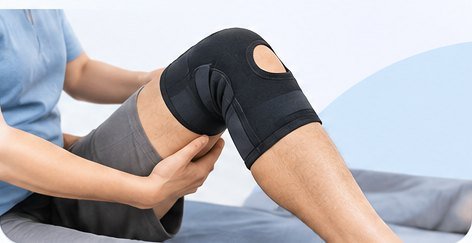
Assessment-led · goal-based
About this service
What orthopaedic & post-surgical rehabilitation covers
This service covers rehabilitation after musculoskeletal surgery or injury. Your programme depends on the procedure or injury, the stage of healing, your surgeon's instructions, your medical status and what you need to do day to day. Our rehabilitation works alongside your surgical follow-up — it never replaces your surgeon's or doctor's review.
Pathways
Care tailored to your situation
Recovery after total knee or hip replacement and other joint replacement procedures.
Rehabilitation after fractures, immobilisation or orthopaedic trauma.
Functional rehabilitation after eligible spinal procedures, within your precautions.
Rehabilitation after repairs such as ACL or tendon procedures, following your treating team's protocol.
Recovery after selected shoulder procedures, including repair or reconstruction.
Help with transfers, walking, balance and daily activities after surgery.
Conditions covered
- Knee and hip replacement
- Fractures
- Selected spinal procedures
- Ligament or tendon repairs (e.g. ACL)
- Shoulder procedures
- Post-operative weakness, stiffness and reduced mobility
Difficulties you may recognise
- Pain or discomfort when moving
- Stiffness
- Reduced strength or range of motion
- Difficulty walking, climbing stairs or getting in and out of bed
- Reduced confidence
- Managing personal care or household tasks
- Uncertainty about precautions and safe progress
Not a diagnostic checklist — everyday signs that rehabilitation may help.
Rehabilitation goals
- Improve safe mobility and independence
- Restore movement and strength within your precautions
- Build balance and activity tolerance
- Return to the daily activities that matter to you
- Teach you and your caregivers what is safe
- Monitor progress and flag anything that needs medical review
We set goals with you. No programme can guarantee an outcome.
Assessment
How we assess you
We review your referral, the procedure or injury, the date of surgery, your surgeon's instructions and precautions, and any reports you share. We take a medical and functional history and assess pain, swelling, movement, strength, balance, walking and daily activities as appropriate — then agree measurable goals and a plan with you. We never test or progress beyond your clinical precautions.
We review your request and check for anything that needs urgent medical attention.
At home or online — history, function, and what matters to you.
Measurable goals, session frequency and a home programme.
Regular outcome checks; the plan is updated as you improve.
Care modes
Home visit or online?
Home rehabilitation
Home visits suit people whose mobility is limited, and let us practise real tasks — stairs, bathroom, getting in and out of bed — in your own home.
Online consultation
Online consultations can suit education, follow-up, exercise review and selected progress checks when this is safe and clinically appropriate.
Some situations need an in-person assessment or facility-based care — we will tell you if that applies.
When should rehabilitation start after surgery?
Timing is individual. It must follow your surgeon's instructions and the protocol for your procedure — share them with us when you book.
Can rehabilitation happen at home?
Often, yes — when you are medically stable and home-based care is appropriate. Your clinician confirms suitability at the first assessment.
Do I need a referral?
A referral or post-operative protocol is very helpful and is needed for some procedures. We confirm what is required during the screening call.
How many sessions will I need?
That depends on the procedure, your recovery, goals, precautions and progress. It is decided after your assessment and reviewed regularly.
Assessment
Ready to start orthopaedic & post-surgical rehabilitation?
Request an assessment to discuss your procedure or injury, your current mobility and the right rehabilitation pathway.