
Neurological rehabilitation · 7 min read
Stroke recovery at home: how rehabilitation helps
Recovery after a stroke continues long after leaving hospital. Rehabilitation at home turns everyday life into practice.
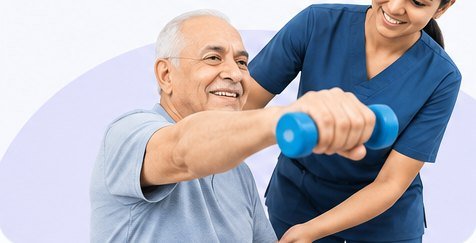
Understanding the topic
A stroke can affect movement, balance, sensation, speech, swallowing, thinking and mood. The brain can adapt, and practice of meaningful tasks supports recovery. Rehabilitation focuses on the person's own goals — standing up safely, walking to the bathroom, using an affected hand.
Key information
- Recovery varies widely from person to person.
- Frequent, task-focused practice tends to help more than occasional exercise.
- Caregivers play a central role between sessions.
- Fatigue is common — pacing activities matters.
What you can do
- Set small, specific goals with your therapist and track them.
- Practise transfers and walking only in the way your therapist has shown you.
- Encourage use of the affected arm in daily tasks when safe.
- Ask about equipment or home changes that make tasks easier and safer.
When to seek professional evaluation
- Any sudden new weakness, facial droop or speech difficulty — call 108 / 112 immediately.
- Coughing or choking with food or drink.
- Falls or near-falls.
- Low mood that affects daily life.
In an emergency call 108 or 112, or go to the nearest emergency department.
References & sources
Clinical review
This article is general information written for HVR patients and families. It is being reviewed by HVR's clinical lead and does not replace personal medical advice. Last updated November 2026.
Keep reading
More from the health library
Recovering at home after a knee replacement: the first weeksOrthopaedic healthMoving safely after surgery: transfers, walking and precautionsPost-surgical recoveryLower back pain: when to keep moving and when to get checkedPain and movementMotor milestones: when to seek a developmental assessmentPaediatric development